

Does Medicare cover home health care? Eligibility, coverage, and cost

Yes. Medicare Part A and Part B cover home health care when you meet the eligibility rules, and you pay nothing for the covered home health services themselves. To qualify, a doctor or other allowed practitioner has to certify that you are homebound, that you need skilled nursing care or therapy on a part-time or intermittent basis, and that you are under a plan of care they review. The care has to come from a Medicare-certified home health agency. This page explains each of those rules in plain language, what the benefit pays for, what it does not, and how a referral actually starts.
Does Medicare cover home health care? The short answer
Medicare covers skilled home health care. It does not cover custodial or personal care on its own.
That distinction is where most confusion starts. Skilled home health means a licensed nurse or therapist coming to your house to deliver care that legally requires their training. Wound care, IV medication, teaching a new insulin routine, physical therapy after a joint replacement, speech therapy after a stroke. Medicare pays for that.
Help with bathing, dressing, meals, housekeeping, and companionship is called personal care or home care. Medicare does not pay for it when it is the only service you need. That is the most common reason a family expects coverage and does not get it.
Who qualifies for home health care under Medicare
Five conditions have to be met. All five, not most of them. Coverage is decided by the certifying practitioner and the plan of care, not by the agency and not by you.
Medicare homebound criteria: what is homebound status?
Homebound does not mean bedbound, and it does not mean you can never leave the house.
Medicare uses a two-part test. First, you need help from another person or a device such as a walker, wheelchair, or cane to leave home, or your doctor believes leaving home would worsen your condition. Second, leaving home has to take a considerable and taxing effort.
You can still leave. Medicare allows absences that are infrequent or of short duration, and it allows leaving for medical treatment as often as needed. Religious services, adult day programs, a haircut, or a family birthday do not disqualify you. What breaks homebound status is a pattern of leaving home easily and routinely for reasons that are not medical.
You must need skilled nursing care or therapy
There has to be a skilled need. Medicare recognizes skilled nursing care, physical therapy, speech-language pathology, and, in some situations, continued occupational therapy.
One point is frequently misunderstood: your condition does not have to be expected to improve. Coverage is available to maintain your condition or slow decline, and a condition described as chronic, stable, or not likely to get better is not by itself a reason for denial. Skilled therapy to preserve function and skilled nursing to manage a progressive disease are both coverable when the plan of care documents why a licensed clinician is required.
The care must be part-time or intermittent
Medicare pays for visits, not shifts. Skilled nursing and home health aide services combined are covered up to 8 hours a day and 28 hours a week, and up to 35 hours a week for short periods when medically necessary. Medicare does not pay for 24-hour-a-day care at home under this benefit. Families planning around round-the-clock supervision need to know that early, because it changes the whole plan.
The home health face-to-face requirement
Before certifying you, the physician or allowed practitioner has to see you in person, or by an approved telehealth visit, for a face-to-face encounter related to the main reason you need home health.
The timing is fixed. The encounter has to happen within the 90 days before your start of care, or within the 30 days after it. Documentation of that encounter has to be on the certification.
A nurse practitioner, clinical nurse specialist, certified nurse-midwife, or physician assistant working with the certifying physician can perform the encounter, as can a hospital or skilled nursing facility physician who cared for you. This is the requirement that most often stalls a referral, and it is usually already satisfied by a recent hospital stay or office visit.
The agency must be Medicare-certified
Medicare only pays a home health agency that holds Medicare certification. Certification means the agency has been surveyed against the federal Conditions of Participation and its outcomes are reported publicly on Medicare Care Compare.
Optimal Home Care is a Medicare-certified and Medicaid-certified skilled home health agency serving the Denver metro, with a CMS Quality of Patient Care rating of 3.5 stars, above the 3-star national middle.
What the Medicare home health benefit covers
When you qualify, the benefit covers:
Part-time or intermittent skilled nursing care, including wound care, IV and injectable medication, catheter and ostomy care, disease monitoring, and teaching you or your family to manage a condition at home
Physical therapy
Occupational therapy
Speech-language pathology services
Medical social services, including help with the emotional and practical side of an illness and with community resources
Part-time or intermittent home health aide services, but only while you are also receiving skilled nursing or therapy
Injectable osteoporosis drugs for women who meet specific criteria
Medical supplies used for your care at home
Durable medical equipment such as a walker, wheelchair, hospital bed, or oxygen equipment
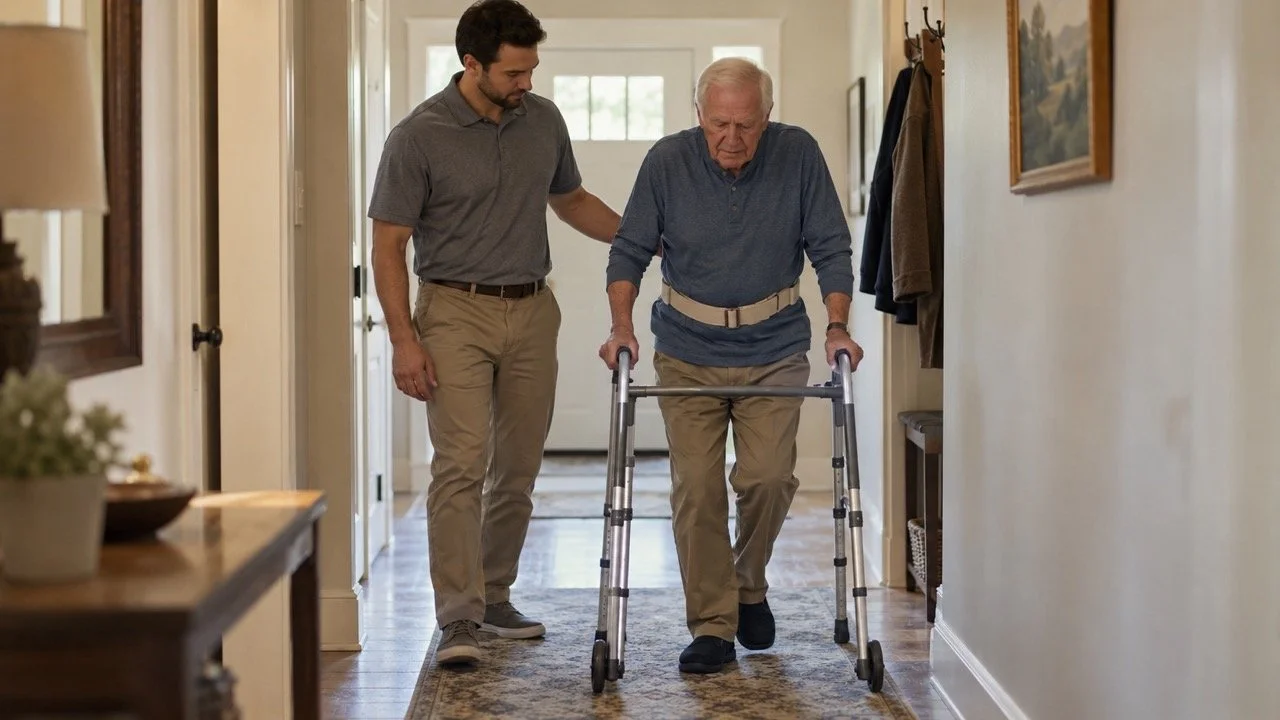
Medicare-certified agencies are required to maintain on-call clinical availability 24 hours a day as a condition of participation, so there is a clinician reachable outside of scheduled visit hours.
What Medicare home health does not cover
The benefit does not pay for:
24-hour-a-day care at home
Home-delivered meals
Homemaker services such as shopping, laundry, and cleaning when they are not part of your care plan
Custodial or personal care that only helps with daily activities such as bathing, dressing, and using the bathroom, when that is the only care you need
Personal care and companion care are real services that many families need. They are simply paid for a different way, through private pay, long-term care insurance, Medicaid programs, or Veterans benefits, and they are not part of the skilled home health benefit.
Is home health free with Medicare? What you pay
For covered home health services, you pay nothing. There is no deductible and no coinsurance for the skilled visits themselves under Original Medicare.
For durable medical equipment supplied through the home health benefit, you pay 20 percent of the Medicare-approved amount after you have met the Part B deductible.
Before care starts, the agency has to tell you in writing how much Medicare will pay and what, if anything, is not covered. That notice is called an Advance Beneficiary Notice.
Medicare Advantage plans must cover at least what Original Medicare covers, but they set their own networks and prior authorization rules, so cost sharing and the approval process can differ. Ask the agency to verify your plan.
The home health plan of care and the OASIS assessment
Two documents drive everything about your care, and knowing what they are makes the first week much less confusing.
The home health plan of care
The plan of care is the written order set for your care at home. Developed by the certifying practitioner with the agency, it lists your diagnoses, the services ordered, how often each clinician will visit, the equipment and supplies needed, your goals, and your rehabilitation potential. The practitioner signs it, and it is reviewed and signed again at least every 60 days.
Nothing happens in your home that is not on the plan of care. To add a service or change a visit frequency, the change goes through your practitioner and the plan is updated.
The home health OASIS assessment
OASIS stands for Outcome and Assessment Information Set. It is a standardized head-to-toe assessment a registered nurse or therapist completes at your first visit, and repeats at set points such as recertification, transfer to a hospital, resumption of care, and discharge.
It takes longer than a normal visit, often 60 to 90 minutes, and the questions can feel exhaustive. There is a reason. OASIS data determines what Medicare pays the agency and is the source of the publicly reported quality measures on Care Compare. Answering it accurately is in your interest, not just the agency's.
How long does Medicare pay for home health, and how many visits?
There is no lifetime cap and no fixed visit limit. Medicare does not say you get a set number of visits.
What exists instead is a cycle. Your certification period runs 60 days. Toward the end of it, the practitioner reviews the plan of care and decides whether you still meet the eligibility rules. If you do, you are recertified for another 60 days, and that can repeat as long as you continue to qualify. Payment to the agency is calculated in 30-day periods under the Patient-Driven Groupings Model, which is a billing mechanic and does not change your 60-day certification cycle or your care.
Visit frequency comes from the plan of care and from clinical need. A patient recovering from a hip replacement might get three therapy visits a week and then taper. A patient managing a complex wound might get skilled nursing several times a week for months. Both are normal. Coverage ends when you no longer meet the criteria, most often because you are no longer homebound, no longer need a skilled service, or have met your goals.
The home health referral process: how to start
The referral itself is straightforward.
A physician, nurse practitioner, physician assistant, clinical nurse specialist, or certified nurse-midwife orders home health. If you are in a hospital or skilled nursing facility, the case manager or discharge planner usually starts this before you leave.
You choose the agency. You are not required to accept the first name you are handed. Medicare gives you the right to pick any Medicare-certified agency that serves your area, and a hospital has to honor that choice.
The agency verifies your Medicare or Medicare Advantage benefits and confirms the face-to-face documentation is in place.
A nurse or therapist comes to your home for the start-of-care visit and the OASIS assessment.
The plan of care goes to your practitioner for signature, and scheduled visits begin.
You can start a referral yourself by calling an agency directly. It will still need an order from your practitioner, but it can begin verifying benefits and coordinating with their office right away.
Home health care in Denver: what to ask an agency
A few questions separate agencies quickly:
Are you Medicare-certified, and what is your Quality of Patient Care star rating on Medicare Care Compare?
Do you serve my city? Optimal Home Care serves Denver, Aurora, Centennial, Englewood, Greenwood Village, Cherry Hills Village, Glendale, Littleton, Lone Tree, Highlands Ranch, and Lakewood.
Which disciplines do you staff directly rather than contract out?
Do you accept my Medicare Advantage plan?
More on the skilled services we provide is on our Medicare-certified home health care in Denver page, and the plans we work with are listed on our accepted insurance page.
Frequently asked questions
Does Medicare Part A or Part B cover home health care? Both can. Which one pays depends on whether you had a qualifying inpatient hospital or skilled nursing facility stay before home health started. For you, the practical difference is essentially none, because covered home health services carry no cost sharing under either part.
Do I have to be bedbound to qualify as homebound? No. You can leave home for medical appointments as often as needed, and for infrequent or short absences such as religious services, an adult day program, a haircut, or a family event. What matters is that leaving takes a considerable and taxing effort and that you generally need help or a device to do it.
Can I get home health care if my condition will not improve? Yes. Medicare coverage is available to maintain your condition or slow its decline. A chronic or stable condition is not by itself grounds for denial, as long as the plan of care documents why a skilled clinician is needed.
How many home health visits does Medicare cover? There is no set number. Visit frequency is set by your plan of care and your clinical need, within the part-time and intermittent limits of up to 8 hours a day and 28 hours a week of combined skilled nursing and aide services, and up to 35 hours a week short term when medically necessary.
Does Medicare cover a home health aide? Only while you are also receiving skilled nursing or therapy. An aide can help with bathing, dressing, and personal care as part of your plan of care. Once the skilled service ends, the aide benefit ends with it.
Talk to someone about whether you qualify
Eligibility is determined by your certifying practitioner and the plan of care, not by us. What we can do is walk through the criteria against your situation and coordinate with your practitioner's office.
Patients and families: Book an eligibility call with our home health team, or call 303-488-9999.
Discharge planners, case managers, and physicians: Start a referral or call 303-488-9999 to reach intake. We verify benefits and confirm face-to-face documentation before the start-of-care visit.
Optimal Home Care, 4380 S. Syracuse St., Suite 600, Denver, CO 80237. Medicare and Medicaid certified, ACHC accredited, Colorado-owned since 2004.
